
- Custom Socks Manufacturer Turkey | Private Label & Bulk Production
- Socks Factory Turkey | Private Label Manufacturing
- Bamboo Socks Manufacturer
- Private Label Socks Manufacturer
- Low MOQ Socks Manufacturer
- Custom Logo Socks Manufacturer | Private Label Sock Production
- Bulk Socks Manufacturer
- Custom Made Socks Manufacturer | Private Label & Custom Production
Sock Tech Pack: 9 Essential Details for Better Production

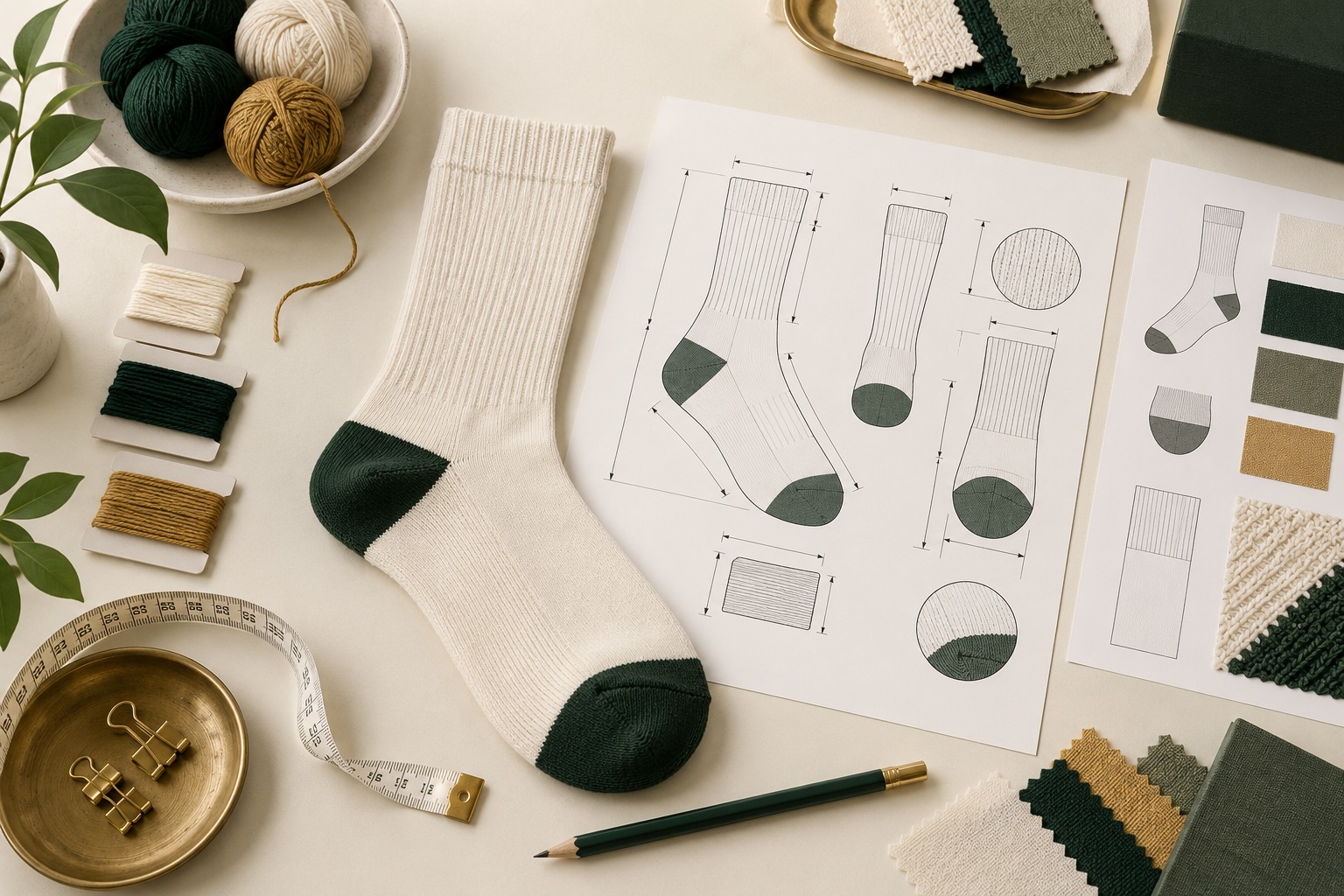
A sock tech pack turns a design idea into a shared production brief. It records what the sock should look like, how it should fit and which details must remain consistent across samples and bulk orders. For a new brand, this document can be a simple, clearly organised file rather than an expensive technical presentation.
This guide explains nine essential sections to include before requesting a quote. You will also find an example specification table and a final handover checklist. A useful sock tech pack makes unanswered questions visible early, when changing a detail is easier than correcting finished stock.
What should a sock tech pack do?
Think of the document as the single reference for your collection. A mood board communicates a visual direction, while a production specification records decisions. Both are useful, but they serve different purposes. A factory cannot reliably infer cuff tension, the intended size range or the exact position of a small logo from an inspiration photograph.
Keep confirmed requirements separate from open questions. For example, you might know the required crew height but want advice on the yarn blend. Mark the blend as a proposal to review, rather than allowing an early suggestion to become an accidental approval. Use one style code per distinct product, and date every revision.
For the wider sequence from brief to shipment, read our custom socks manufacturing process guide. This article focuses on the document used to start that sequence.
9 essential sock tech pack details
1. Product identity and intended use
Begin with your brand, style name, style code and revision number. State whether the product is intended for everyday wear, a promotional campaign, sports use or a gift collection. Explain the customer and footwear context. A lightweight dress sock and a cushioned training sock need different discussions, even when their artwork looks similar.
2. Clear views of the design
Include front, back, side and sole views wherever the design changes. Use arrows to identify the cuff, heel, toe and logo positions. Label the inside and outside of each foot when placement matters. If the two socks are different, show both; a factory should not have to guess whether artwork is mirrored or repeated.
3. Measured dimensions and measuring method
Your sock tech pack should name each point of measurement. Define leg height, foot length and cuff width with a sketch showing exactly where to measure. Specify whether the sock is relaxed, laid flat or stretched under an agreed method. Ask the manufacturer to propose feasible tolerances and record the final agreement beside each dimension.
Do not copy measurements from a photograph. Measure a physical reference pair if you have one, and explain what you like or want to change. A reference sample is especially useful when your desired fit is difficult to describe in words.
4. Size range and quantity breakdown
List the intended customer shoe sizes and the sizing system used. Separate the total order from the number of pairs in each size and colour. For example, 300 pairs spread across six combinations is a different planning problem from 300 identical pairs. Confirm the applicable minimums before completing the purchase order.
5. Yarn composition and construction
Record the desired fibre composition, hand feel, thickness and cushioning areas. If you want material advice, describe the outcome: a soft everyday sock, a lighter summer style or a more structured cuff. Keep construction requirements in the sock tech pack, including reinforced zones and the preferred toe finish, subject to the factory’s technical review.
Comfort is influenced by more than fibre choice. Seam bulk, stretch and construction also matter. For a broader technical reference, Coats discusses seam softness, security and stretch in apparel. Use that as general context, then agree on the appropriate sock construction with your manufacturer.
6. Colour references and approval method
Name every colour used in the body, cuff, heel, toe and artwork. Provide an agreed physical or coded colour reference where possible. Screen colours vary between devices and lighting conditions, so a screenshot alone is a weak approval standard. Ask how available yarn colours will be presented and which physical sample will become the reference.
7. Artwork and branding files
Supply readable artwork, preferably with editable source files when available. Include the logo dimensions, placement and intended technique. Small letters or fine lines may need adjustment for knitting. Record the approved version in the sock tech pack and retain an image of the signed-off sample so later revisions do not overwrite it.
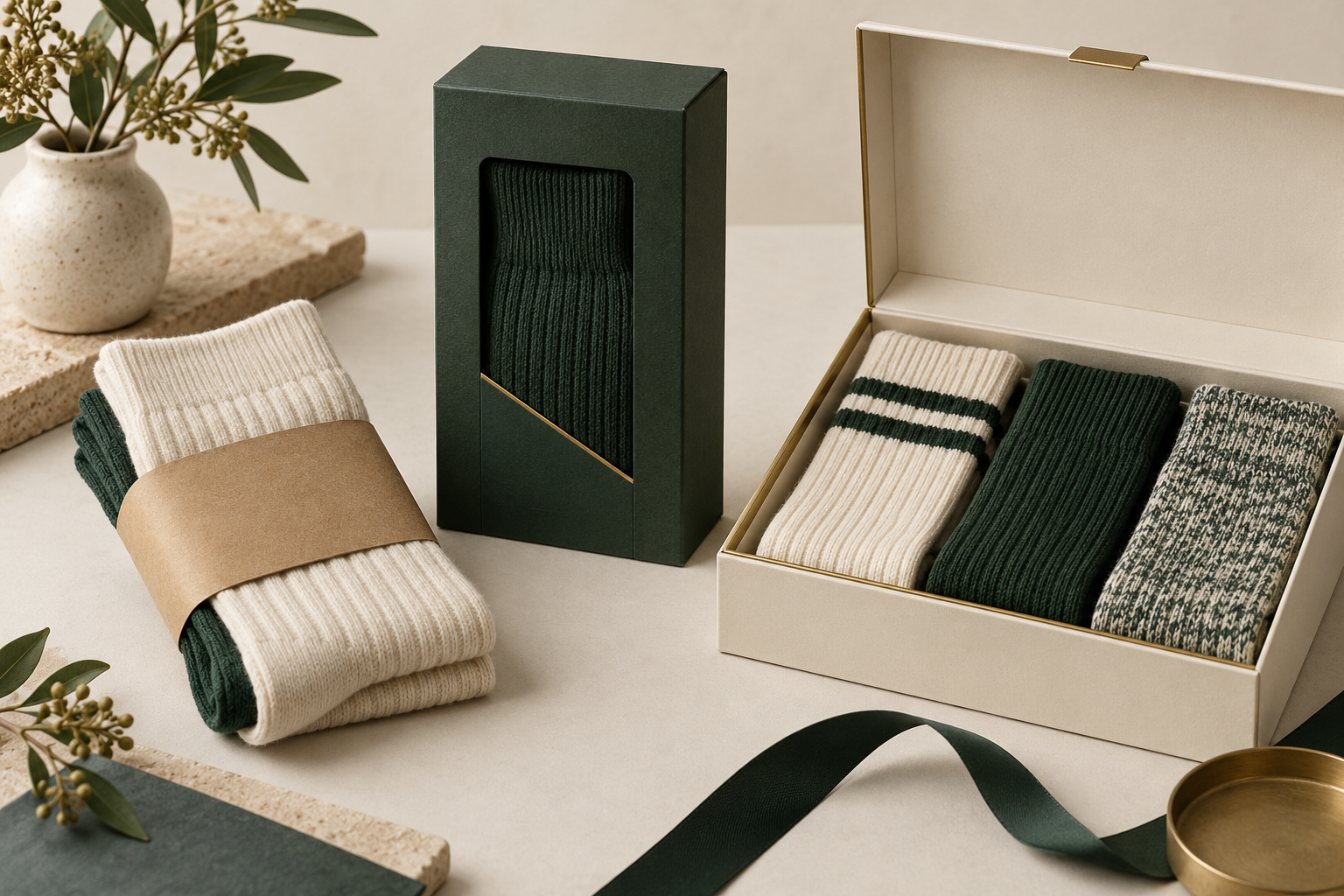
8. Packaging and pair presentation
Specify whether the socks will use a paper band, header card, box or bulk presentation. State how pairs are grouped, which size information must be visible and who supplies the packaging artwork. Packaging dimensions should be checked against an actual folded pair. Confirm barcode placement and the destination retailer’s requirements before printing.
9. Sample, inspection and delivery references
Finish with the sample identification, approval status and any agreed checks. Record the planned destination and whether the requested date means factory dispatch or arrival. Lead times should be confirmed for the actual specification and production schedule. Keep the approved sample and latest written brief available to both parties.
A simple sock tech pack example
The following table is a structure to adapt, not a manufacturing specification. Replace each example with your own requirement and ask the factory to confirm feasibility.
| Field | Example entry | Confirmation needed |
|---|---|---|
| Style | Everyday crew / EC-01 | Product code and revision |
| Size range | Customer sizes to be supplied | Factory size mapping |
| Leg height | Measured reference pair | Method and tolerance |
| Body material | Soft cotton-rich proposal | Final composition and yarn |
| Logo | Outer leg placement | Dimensions and knit readability |
| Packaging | Printed paper band | Folded size and artwork proof |
Before sending your sock tech pack
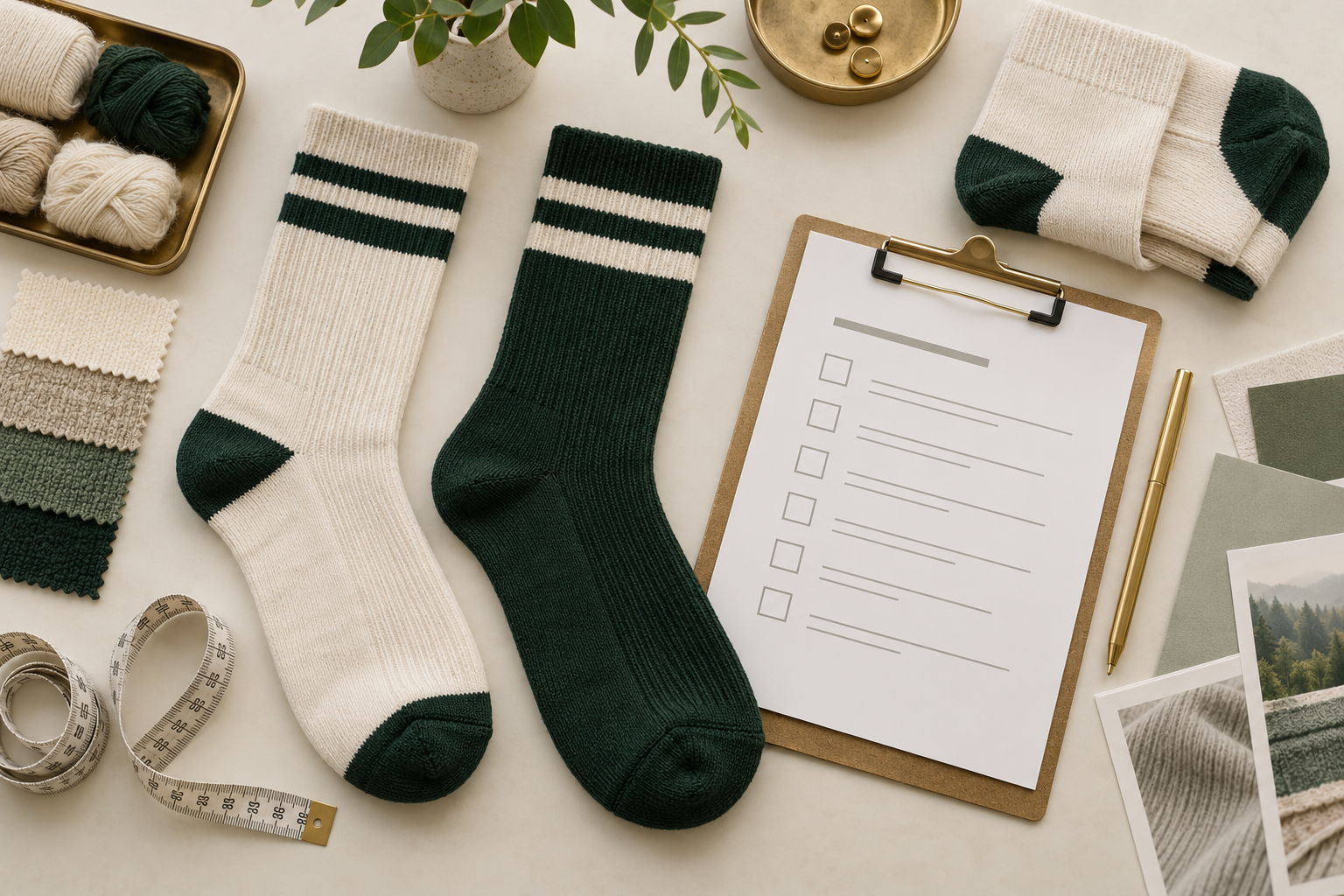
Read the file as though you have never seen the product. Check that every drawing has a matching style code, each colour has a reference and the quantity table adds up. Remove outdated screenshots from the final folder. A short change log helps the factory understand what changed between the first sample request and the approved brief.
- Use one current file name with a revision date.
- Attach artwork and reference photographs separately.
- List open questions in a clearly marked section.
- Confirm who can approve samples and artwork.
- Keep written approval linked to the correct sample version.
Sock tech pack questions
Do I need a professional designer to begin?
No. Clear sketches, a physical reference and a structured brief can start the conversation. Technical details can then be developed with the manufacturer. Describe uncertainties openly instead of filling them with guessed numbers.
Can one file cover several styles?
Yes, if each style has its own identifiable specification, artwork and size breakdown. Avoid combining conflicting requirements into a single unlabeled page. Related styles can share a collection overview while retaining individual technical sheets.
When should the document be finalised?
Update the sock tech pack throughout sampling, then confirm the final version before the main production order. Any later change should be discussed for its effect on cost, scheduling and the approved reference.
Use the sock tech pack to compare quotations
A useful quotation comparison starts with the same brief sent to each manufacturer. If one price includes a printed band and another covers unpackaged pairs, the two totals do not describe the same product. Ask suppliers to identify which elements are included, which are proposed alternatives and which still require approval.
Separate sample charges, production unit price, packaging setup and transport arrangements. Record the currency and the quantity on which the price is based. If you change the yarn, artwork or size breakdown later, request a revised quotation against the new document version. This gives you a clearer record than trying to apply an earlier unit price to a different product.
Distinguish a requirement from a preference
Mark a requirement when it is essential to the customer experience or sales channel. For example, a retailer may need a particular display format. Mark a preference when you are open to another approach, such as a similar available yarn colour. This distinction gives the factory room to suggest practical options without changing the core product unexpectedly.
Your sock tech pack can include a decision column beside each open item: proposed, awaiting sample, accepted or replaced. Keep dates and the name of the person responsible for the next action. For a small collection, this simple record can be easier to maintain than a large spreadsheet with unclear ownership.
Plan a controlled first order
For an initial collection, consider limiting the number of simultaneous variables. One construction with a small, well-defined size and colour range is easier to review than many unrelated styles. This is a planning choice rather than a universal rule; your customer demand and manufacturer minimums should guide the final assortment.
After receiving the first order, record practical observations about fit feedback, packaging handling and product presentation. Use those notes to prepare the next sock tech pack revision. Keep the successful features clearly identified so a new request does not accidentally remove the details customers liked.
Keep approvals accessible
Store the approved brief, artwork and sample photographs together. Send one clear handover message naming the current version and listing any agreed exceptions. Ask the factory to confirm that it is working from the same file before production begins. This creates a shared reference for future questions and repeat orders.
Resolve sock tech pack questions before sampling
Use the first technical review to identify decisions that affect one another. A larger knitted logo may need a different placement, while extra cushioning may change the space inside a close-fitting shoe. Ask the factory to explain the practical trade-offs instead of approving each detail in isolation. Record the selected option in the current sock tech pack.
Discuss artwork at the finished scale
Print the proposed motif at the intended size and compare it with the physical reference. Very fine lines, small gaps and closely spaced letters can be difficult to interpret on a knitted surface. The manufacturer may suggest simplifying a detail or increasing its size. Review the actual result on a sample before deciding whether the adaptation preserves your brand identity.
Make the assortment easy to follow
Give every size and colour combination a clear reference. A table that lists only a total number of pairs can leave the production and packing teams uncertain about the actual assortment. Check the totals by style, by size and by colour, then confirm that those figures match the purchase order. For multipacks, also record which combinations belong together.
Separate product references from inspiration
A competitor photograph can communicate a general mood, but it should not replace your own design decisions. Explain the specific feature you are referencing, such as leg height or colour balance, and develop your own artwork. Keep inspiration material in a separate folder so it is not confused with approved production files.
Reconfirm the final handover
Before the order moves forward, ask both the brand coordinator and factory contact to review the open-question list. Close each item with a written decision or an agreed next step. If a decision remains pending, explain whether it prevents sampling, pricing or production. This makes the sock tech pack a useful working tool rather than a document that looks complete but contains unresolved assumptions.
For future collections, retain the same layout and measuring conventions. A familiar structure saves time for everyone reviewing the file. Update the content to fit the new product, and check that copied information still applies. A controlled template is helpful only when its details are actively reviewed.
Prepare your next production brief with Zenta
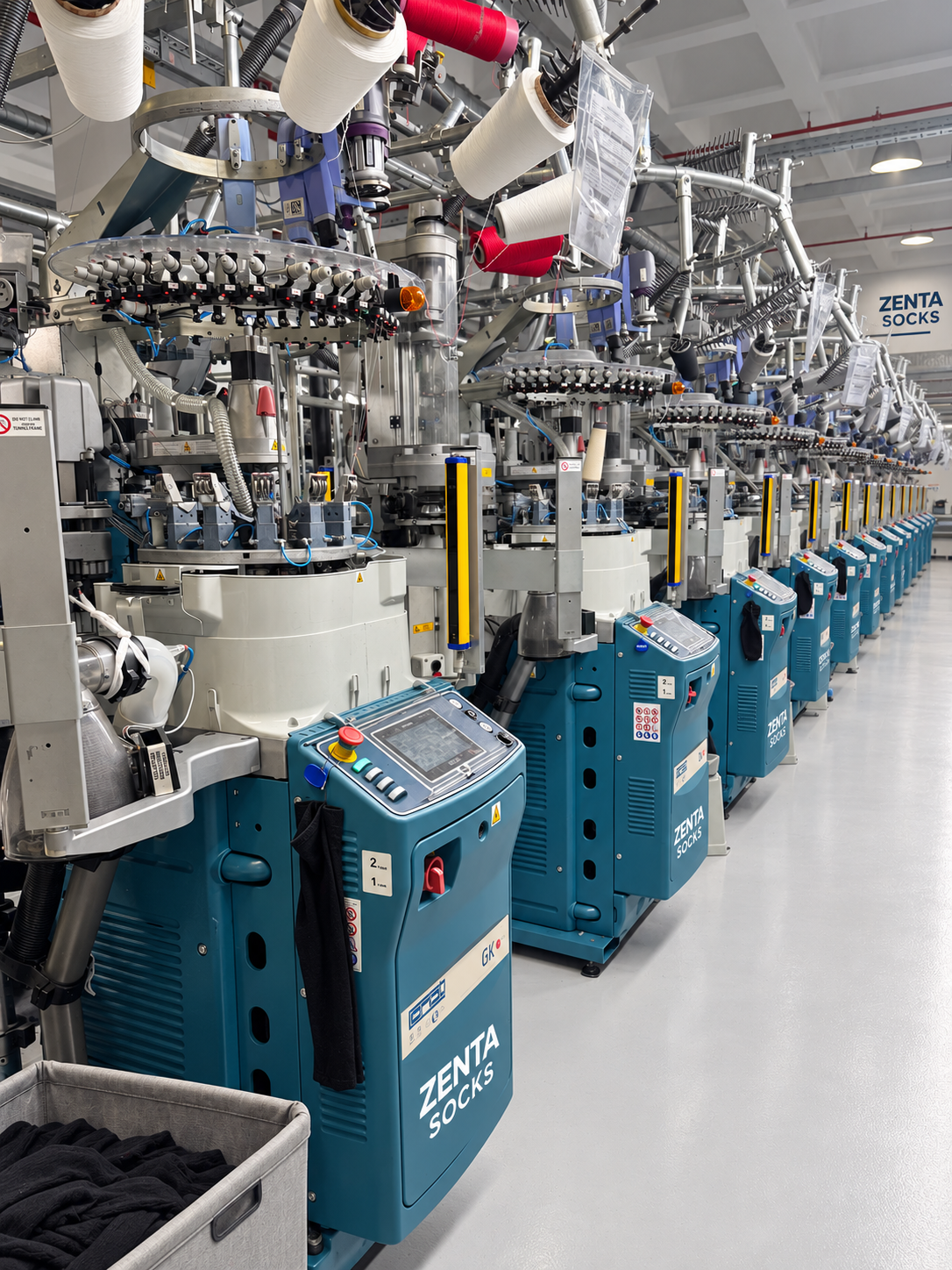
Zenta Socks works with brands on private label sock manufacturing and low MOQ production options. Share your sock tech pack, reference pair or initial idea with our team. We can review the requirements and explain what needs confirmation before quoting and sampling.