
- Custom Socks Manufacturer Turkey | Private Label & Bulk Production
- Socks Factory Turkey | Private Label Manufacturing
- Bamboo Socks Manufacturer
- Private Label Socks Manufacturer
- Low MOQ Socks Manufacturer
- Custom Logo Socks Manufacturer | Private Label Sock Production
- Bulk Socks Manufacturer
- Custom Made Socks Manufacturer | Private Label & Custom Production
Sock Sample Approval: 7 Essential Checks for Better Quality

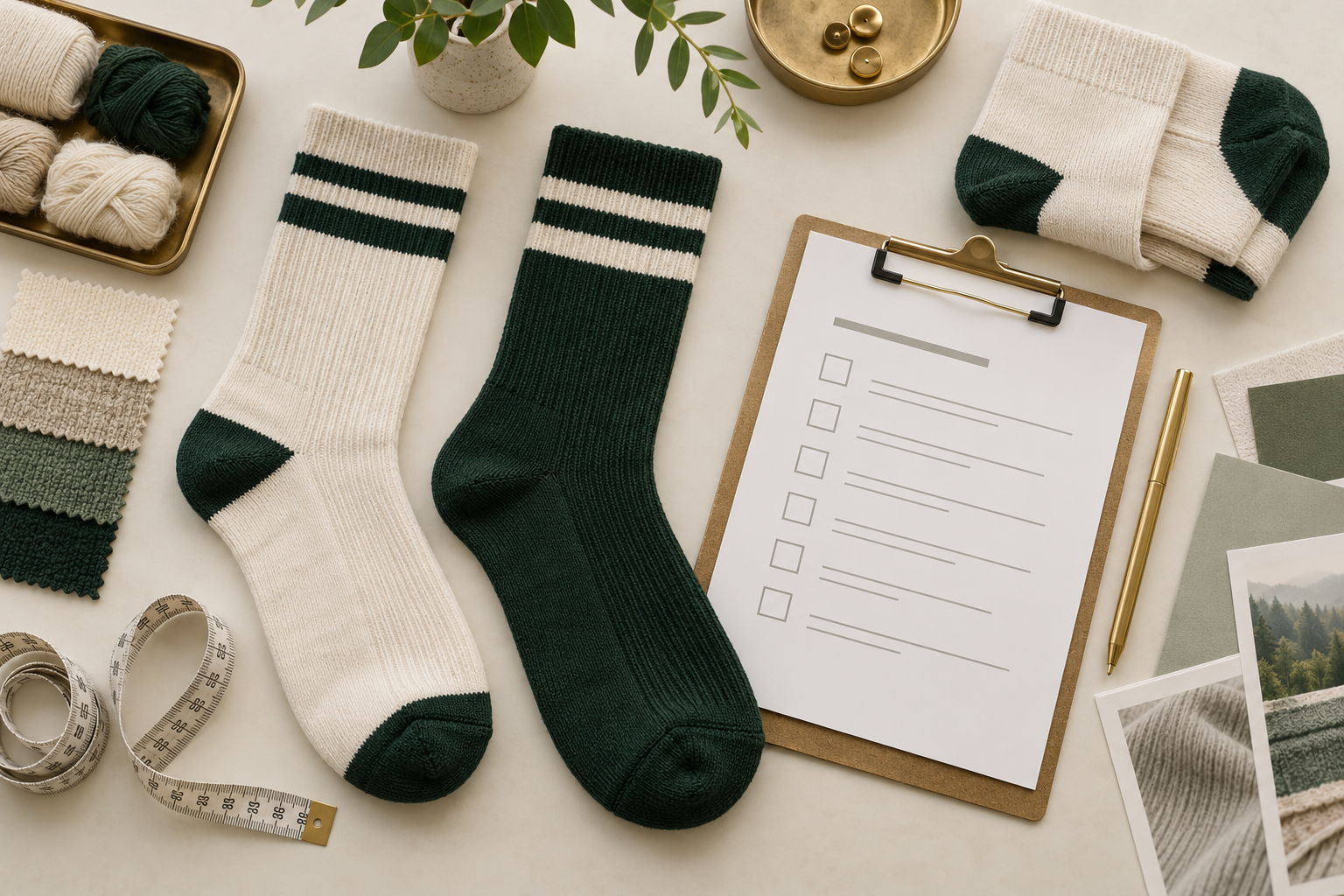
Sock sample approval is the point where a promising design becomes an agreed production reference. A sample may look right in a photograph yet still need changes to fit, cuff feel, logo placement or packaging. A structured review helps you identify those issues before placing a larger order.
This seven-part checklist is designed for brands buying custom or private label socks. Use it to record observations, ask useful questions and give precise feedback. Sock sample approval should produce a clear decision: approved, approved with specific changes, or requiring a revised sample.
Prepare for sock sample approval
Start by identifying exactly what you received. Record the style code, sample version, size, colour and date. Ask whether the sample uses the intended bulk yarns, colours and construction. Development samples sometimes answer a particular question rather than represent every final detail; confirm any differences before reviewing them as final products.
Keep your specification nearby and appoint one person to combine feedback from the team. Conflicting notes sent through separate messages can cause confusion. For example, a designer may ask for a tighter cuff while a buyer asks for a softer feel. Resolve the preferred direction before sending the factory a consolidated response.
If you are still defining the brief, our sock manufacturing process guide explains how sampling fits into the wider production sequence. You can also see the equipment and environment on our factory page.
7 essential sock sample approval checks
1. Confirm the style and size
Compare the sample with the agreed style: crew, ankle, sneaker or another construction. Check the leg height, heel position, foot length and cuff appearance using the measuring method agreed with the factory. Do not compare a stretched measurement with a relaxed specification and interpret the difference as a defect.
Review the intended size range rather than assuming one pair suits every customer. If your collection contains several sizes, discuss how each size will be verified. Keep the measurement record with the sock sample approval notes so later reviewers know what was actually checked.
2. Evaluate fit in the intended use
Try the socks with appropriate footwear and representative wearers. Note whether the heel sits correctly, the toe area feels crowded or the sock moves inside the shoe. Check the cuff after a reasonable period of wear, and ask the wearer to describe any pressure or slipping rather than simply saying that the fit is good or bad.
A brief fitting is useful, but it is not proof of long-term performance. Agree on any extended wear evaluation needed for the product. Keep personal preferences separate from requirements shared by the target customer group.
3. Inspect the knitting and toe finish
Look at the outside and inside of the sample in even lighting. Check for visible holes, loose yarn ends, irregular patterns and unwanted bulk. Inspect the heel and toe areas carefully. Review the toe finish by touch as well as appearance, particularly when the product is intended for close-fitting footwear.
Ask how a requested construction change could affect stretch or appearance. General apparel guidance from Coats explains why seam softness, bulk and stretch are important design considerations. Your final criteria should still be specific to the agreed sock product.
4. Review colours and logo readability
Compare colours with the agreed physical reference under consistent lighting. Phone photographs and bright displays can distort colour judgement. Check that the logo is readable at its actual size, positioned on the correct side and aligned as expected when the sock is worn.
For mirrored or left-and-right artwork, inspect both socks together. Stretch the fabric as it would be worn and observe how the design changes. During sock sample approval, a small adjustment to letter thickness or placement may produce a clearer result than trying to reproduce every detail of a digital mockup.
5. Assess material feel and care behaviour
Record the sample’s hand feel and thickness before washing. Follow the proposed care instructions and record the washing and drying conditions. Compare dimensions, colour appearance, surface condition and fit afterwards. Use the same conditions when comparing revised samples, otherwise the results may not be meaningful.
A home wash review can help identify concerns but does not replace agreed laboratory tests or support unsupported performance claims. If shrinkage, abrasion or colourfastness is critical to your range, ask which test method, conditions and acceptance criteria will apply. Confirm costs and responsibilities before commissioning additional checks.
6. Check packaging and customer information
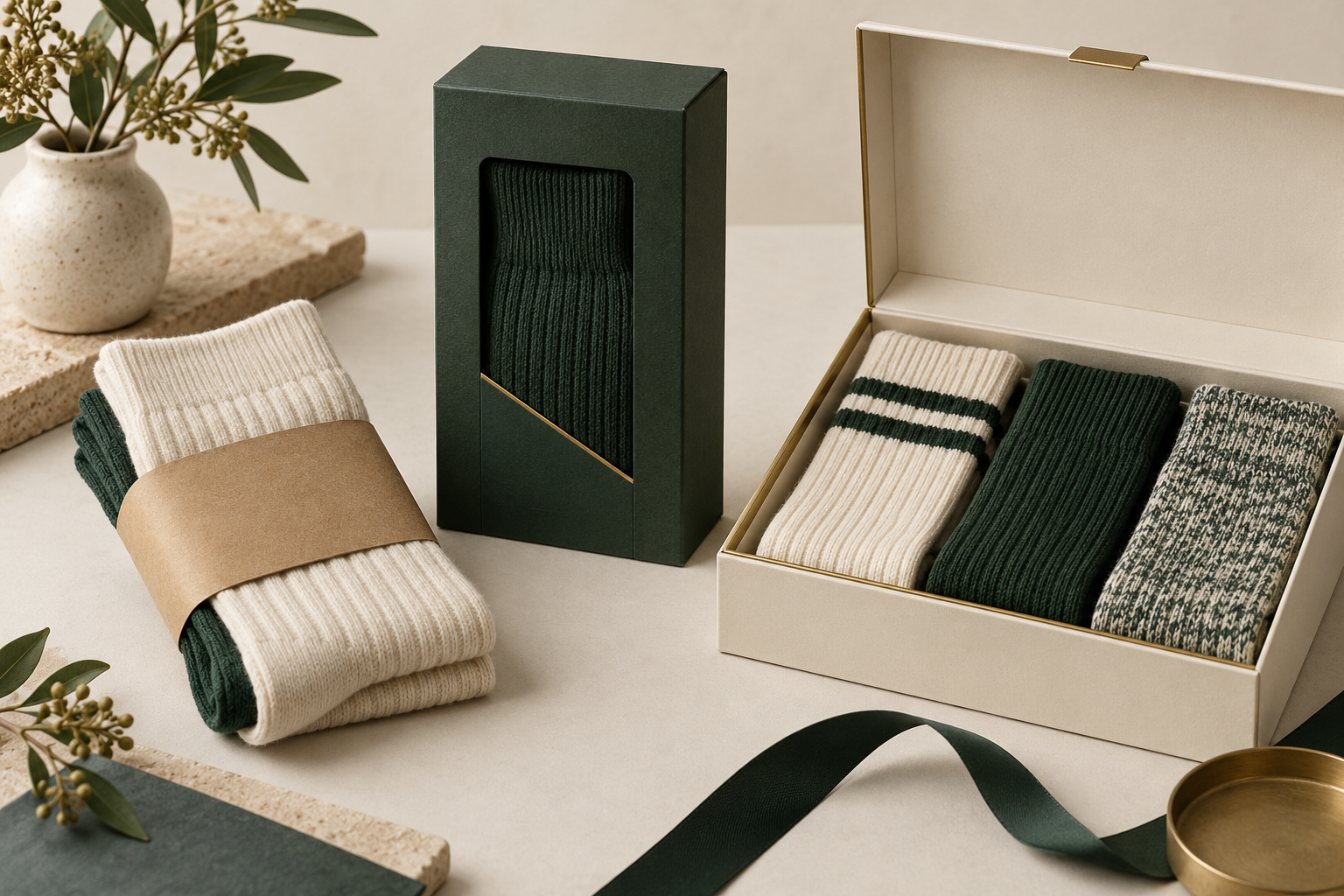
Fit the actual pair into the proposed band, card or box. Check the fold, presentation and ease of handling. Confirm that the displayed size matches the enclosed product and that artwork is readable at print size. Where a barcode is used, validate the correct product reference and scanning performance on a printed proof.
Packaging can change the customer’s first impression and the practical cost of fulfilment. Include it in sock sample approval instead of reviewing it only after the socks are complete. Confirm the final market’s information requirements with the responsible team before approving print artwork.
7. Compare the sample with the bulk order brief
Review the whole specification one final time: construction, materials, sizes, colours, branding and packing. List every remaining difference between the sample and the planned order. Ask the factory which details require another sample and which can be confirmed through a separate artwork or material approval.
Do not approve a product based on an unrecorded conversation. Reference the exact sample version in the written decision. Keep an approved reference pair where possible, with matching photographs and a dated specification.
Build a sock sample approval record
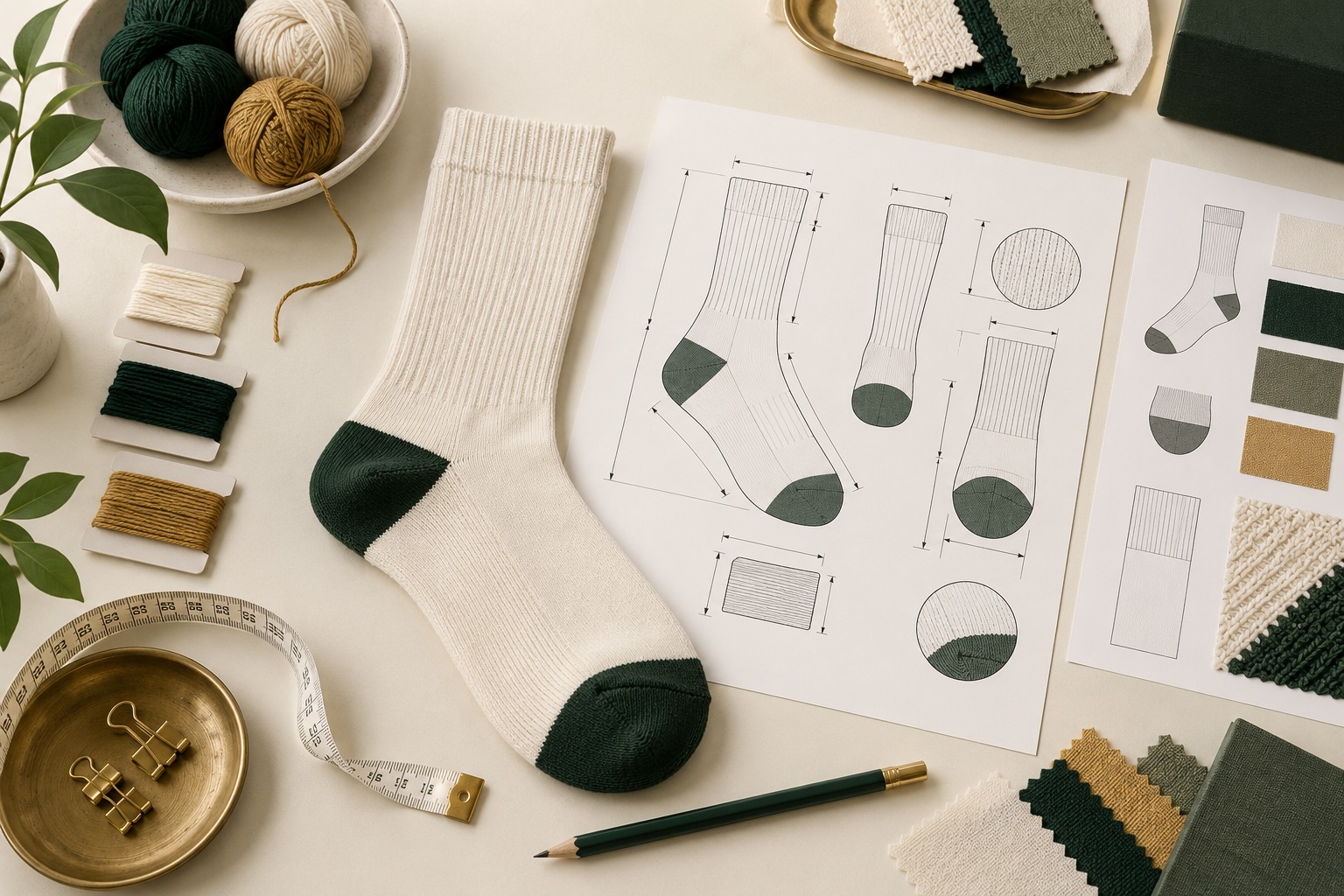
A concise approval sheet is easier to use than a long email thread. It should make the decision and remaining actions obvious. The example below is a working format, not a universal quality standard.
| Review area | What to record | Decision |
|---|---|---|
| Identification | Style, size, colour, sample version | Correct / clarify |
| Measurements | Method, observed result, agreed tolerance | Accept / revise |
| Fit and comfort | Wearer feedback and footwear context | Accept / revise |
| Artwork | Logo file, position and colour reference | Accept / revise |
| Care review | Wash conditions and observations | Accept / investigate |
| Packaging | Artwork version and product presentation | Accept / revise |
Make sample feedback actionable
Replace vague comments with location, observation and requested action. Instead of “the logo is wrong,” write “the outer-leg logo on style CR-02 is difficult to read when worn; please review the letter spacing using artwork version three.” Attach a marked photograph and identify the matching sample.
Group feedback into required corrections, questions and optional preferences. Ask the manufacturer to confirm the proposed response and any effect on price or timing. This keeps sock sample approval practical and reduces the chance that a preference is mistaken for a mandatory production change.
Common sock sample approval questions
Is a photograph enough for approval?
Photographs are helpful for artwork and visible details. They cannot fully communicate fit, feel, toe comfort or care behaviour. For those decisions, review a physical sample wherever practical.
Should every small change require a new sample?
It depends on the change. Ask whether it affects construction, fit, yarn or another critical feature. Agree on the appropriate confirmation rather than assuming that either every revision or no revision needs another physical sample.
Does approval guarantee every production pair is identical?
No. Approval establishes the agreed reference. Bulk production still needs an agreed quality approach and realistic tolerances. Discuss how concerns will be documented and handled before ordering.
Make sock sample approval consistent across your team
A sample can pass through several people before the order is confirmed. Give each reviewer a defined task so feedback does not become a collection of conflicting preferences. A designer might check artwork, a product buyer might review the assortment and a wearer might provide fit observations. One coordinator should bring those comments together.
Use the same review conditions for each version. If one sample is measured straight from its package and another after washing, their dimensions cannot be compared fairly without noting the difference. Record the condition of the pair and allow it to rest in a consistent way before measuring, according to your agreed method.
Separate urgent corrections from future ideas
During sock sample approval, distinguish between a problem with the agreed specification and a new idea for the collection. A logo on the wrong side is different from deciding that you now prefer a new logo size. Both may need action, but they can have different effects on the sample schedule and quotation.
Keep optional ideas in a separate section so they are not mistaken for conditions blocking approval. If a requested change is critical, identify the exact feature and ask how the revised result will be demonstrated. Where several changes interact, another complete sample may be more useful than separate photographs.
Retain the right reference pair
Label the physical reference with a removable tag showing the style and sample version. Keep it away from routine wear tests unless it is specifically the test sample. If the pair is washed or altered during review, record that fact. A reference is most useful when both parties understand its condition.
For repeat orders, check whether the original materials and colour references remain available. Do not assume that an old sock sample approval automatically confirms a later order with different yarns, packaging or sizes. Discuss any substitutions and document the current agreement before placing the reorder.
Review arrival expectations
Finally, connect the approval date with the production plan. Ask when the approved changes can enter production and what depends on packaging or material availability. Clarify the difference between completion, dispatch and arrival. A clear schedule helps the brand plan photography, launch communications and stock allocation without treating a provisional date as a confirmed delivery commitment.
Use a clear sock sample approval decision
Write the overall decision at the top of the review sheet. An approved sample is different from a sample that is accepted only after listed changes. If the product is not ready, say that another review is required and identify which features need to be checked again. This prevents a positive comment about one detail from being mistaken for approval of the whole product.
Example: a fit correction
Suppose a sample’s appearance is accepted but the wearer reports pressure at the cuff. Record the sample version, the size reviewed and the conditions of the fitting. Describe the pressure and ask the manufacturer to propose an adjustment. Avoid prescribing an arbitrary dimensional change unless it has been technically reviewed. The revised sample should be assessed using the same method.
During the next sock sample approval review, check the original concern and any related features. A change intended to improve cuff feel could also affect appearance or recovery. Confirm that the revised result remains suitable for the product and update the written reference. Keep the previous sample identified as superseded rather than allowing it to circulate as the current approval.
Example: artwork that needs simplification
A logo can be recognisable on a screen but unclear in the actual knit. Mark the letters or lines that are difficult to read and compare the result with the intended viewing distance. Ask for the proposed adaptation before requesting another complete design. The goal is a recognisable brand presentation on the finished sock, not an unexamined copy of a large digital graphic.
Confirm who signs off each area
When the brand has several stakeholders, agree who can approve fit, artwork and packaging. Send a consolidated response to the factory. If one area is approved while another remains open, record those separate statuses. This keeps sock sample approval moving without implying that production can begin before the remaining critical decisions are resolved.
For a small team, a short table with names, dates and actions is often enough. Keep the approval message, marked photographs and current specification together. When the order is repeated, review that record alongside any customer feedback, supplier changes or revised packaging requirements.

Plan your samples with Zenta Socks
For private label socks, Zenta can discuss your design brief, sampling requirements and production options. Our low MOQ service starts from 100 pairs, with the applicable minimum confirmed for your project. Sampling and delivery dates depend on the agreed specification.
Contact Zenta to discuss your sample and manufacturing brief. Bring your sock sample approval checklist so the first review begins with clear expectations.