
- Custom Socks Manufacturer Turkey | Private Label & Bulk Production
- Socks Factory Turkey | Private Label Manufacturing
- Bamboo Socks Manufacturer
- Private Label Socks Manufacturer
- Low MOQ Socks Manufacturer
- Custom Logo Socks Manufacturer | Private Label Sock Production
- Bulk Socks Manufacturer
- Custom Made Socks Manufacturer | Private Label & Custom Production
Custom Sock Packaging: 7 Smart Ideas for a Better Launch

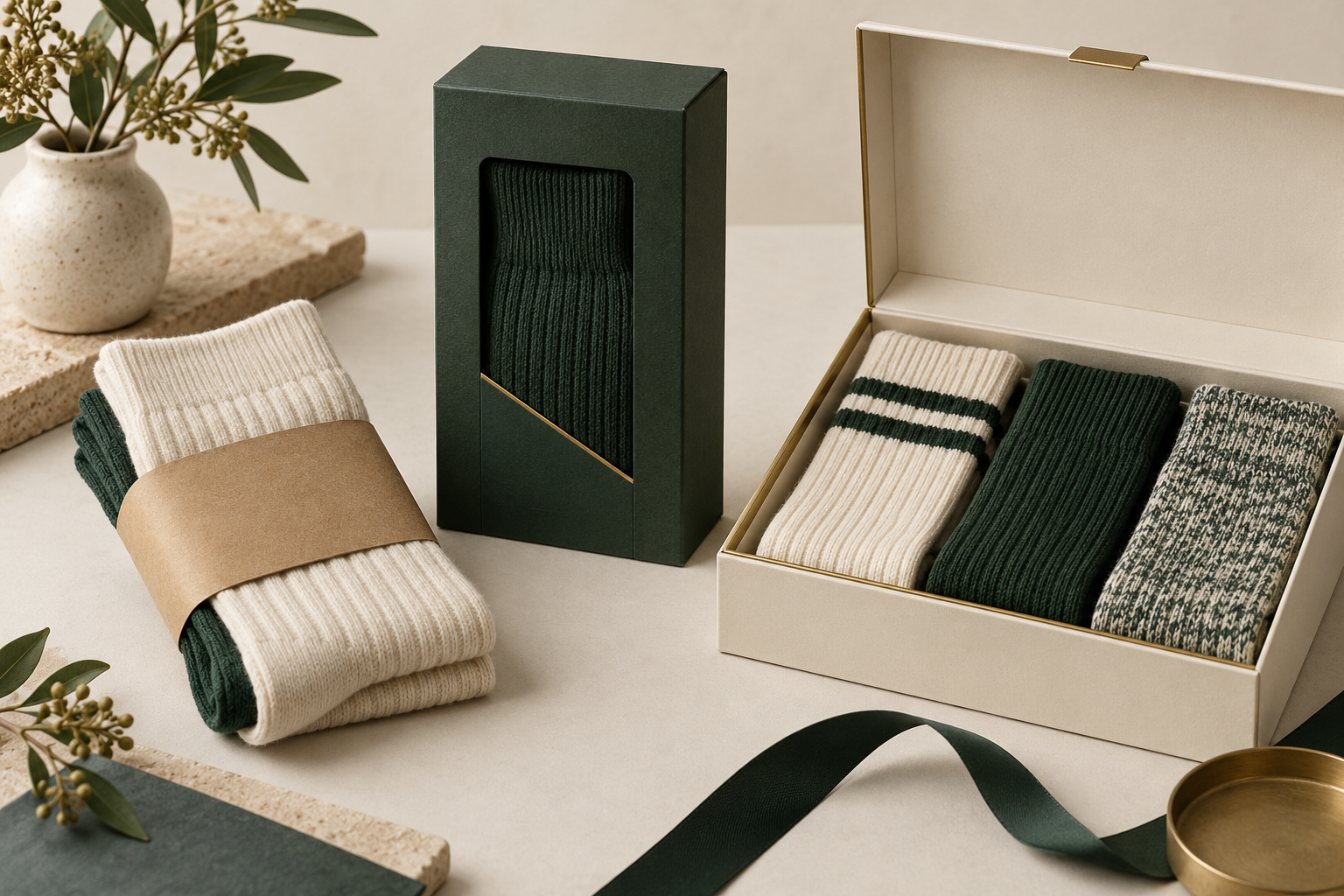
Custom sock packaging connects the finished product with the way your brand sells it. A paper band may suit an everyday retail range, while a box can support a gift set. The best choice depends on the sales channel, the number of pairs, the required information and the practical handling of the product.
This guide compares seven options and explains what to confirm before printing. Custom sock packaging should be planned alongside the sock specification so that folds, dimensions and artwork are checked against a real pair rather than an assumed shape.
Choose custom sock packaging for the sales channel
Before choosing a finish, decide how the customer will receive the socks. Will they hang from a retail display, sit on a shelf, travel in a mailer or form part of a gift box? Each route creates different needs. A hanger may be essential for one retailer and unnecessary for an online-only collection.
Write down the number of pairs per pack, the folded product size and how sizes and colours will be identified. Then discuss the budget per sellable unit, including assembly and shipment. A lower print price does not always mean a lower complete packing cost.
For a broader view of the service, explore Zenta’s private label sock manufacturing. Packaging decisions are easier when the sock design and order breakdown are already clear.
7 smart custom sock packaging ideas
1. A printed paper band
A wraparound band keeps the pair visible while creating space for your logo, size and product information. It can work well for everyday collections and compact gift assortments. Measure the band around an actual folded pair and test whether it stays in place without compressing the cuff or distorting the presentation.
Ask for a folded prototype before approving the final print run. The artwork should be readable across the front and back, with key information kept away from folds and joins.
2. A retail header card
A header card offers a clear front-facing brand area and can accommodate a hanging format where required. Confirm the retailer’s display system before specifying the hole position or shape. The fastening method should hold the pair securely while allowing the customer to remove the packaging without damaging the socks.
This custom sock packaging option is useful when shelf presentation and quick size identification are important. Review the back panel too, because practical information often needs more space than the initial design allows.
3. A compact folding carton
A folding carton provides more printed surface and a consistent outer shape. It can suit online orders, premium basics or small multipacks. However, the box must be sized for the finished product rather than chosen only for visual impact. Excess empty space increases storage and handling without improving the socks themselves.
Check how the carton opens, whether it closes reliably and how easily staff can pack it. If the socks have cushioning or a thicker knit, confirm the dimensions using the actual construction.
4. A presentation gift box
A gift box can organise several designs into a single collection. Consider the opening experience, the visibility of each pair and how the contents stay arranged during transport. A decorative insert is only useful if it fits the socks and does not make packing unnecessarily difficult.
For custom sock packaging aimed at gifting, make the set contents clear. State whether the box contains matching pairs, mixed designs or a particular size assortment. Ask for a fully packed prototype, not just an empty box sample.
5. A practical multipack sleeve
A sleeve or outer wrap can group several pairs while preserving a simple format. It is useful when the customer buys the assortment as one unit. Confirm the exact pair count, product mix and size combination so the printed information matches what the packing team assembles.
Use clear bundle references and a written packing instruction. A small illustrated packing guide can prevent mistakes when similar colourways are grouped into different sets.
6. A minimal bulk presentation
For some promotional projects or onward packing operations, individual decorative packaging may be unnecessary. A simple pair presentation with clearly identified grouped quantities may be more practical. Confirm how pairs are kept together and protected during handling, as well as the information required on the outer packaging.
Minimal custom sock packaging does not mean an undefined packing method. Record the grouping, identification and carton requirements so the receiving team can count and sort the order efficiently.
7. A coordinated campaign set
Brands can adapt a band, card or box to match a launch, event or seasonal collection. Keep the structural format practical and customise the printed design. This approach may avoid developing a completely new packaging structure for every campaign, although print quantities and availability still need confirmation.
A campaign deadline should be discussed early. Packaging proofs, sock sampling, printing and final assembly all need to fit the production plan. Confirm whether the target date refers to dispatch or arrival.
Compare custom sock packaging options
| Format | Useful for | Key question |
|---|---|---|
| Paper band | Visible product and compact presentation | Does it fit the folded pair securely? |
| Header card | Retail display | Does it match the hanging system? |
| Folding carton | Consistent boxed presentation | Is the internal space appropriate? |
| Gift box | Curated sets | Will the contents remain organised? |
| Multipack sleeve | Several pairs sold together | Is the assortment clearly defined? |
| Bulk presentation | Onward packing or distribution | Can the receiving team identify quantities? |
| Campaign set | Coordinated launches and events | Are artwork and timing approved early? |
Approve the custom sock packaging proof
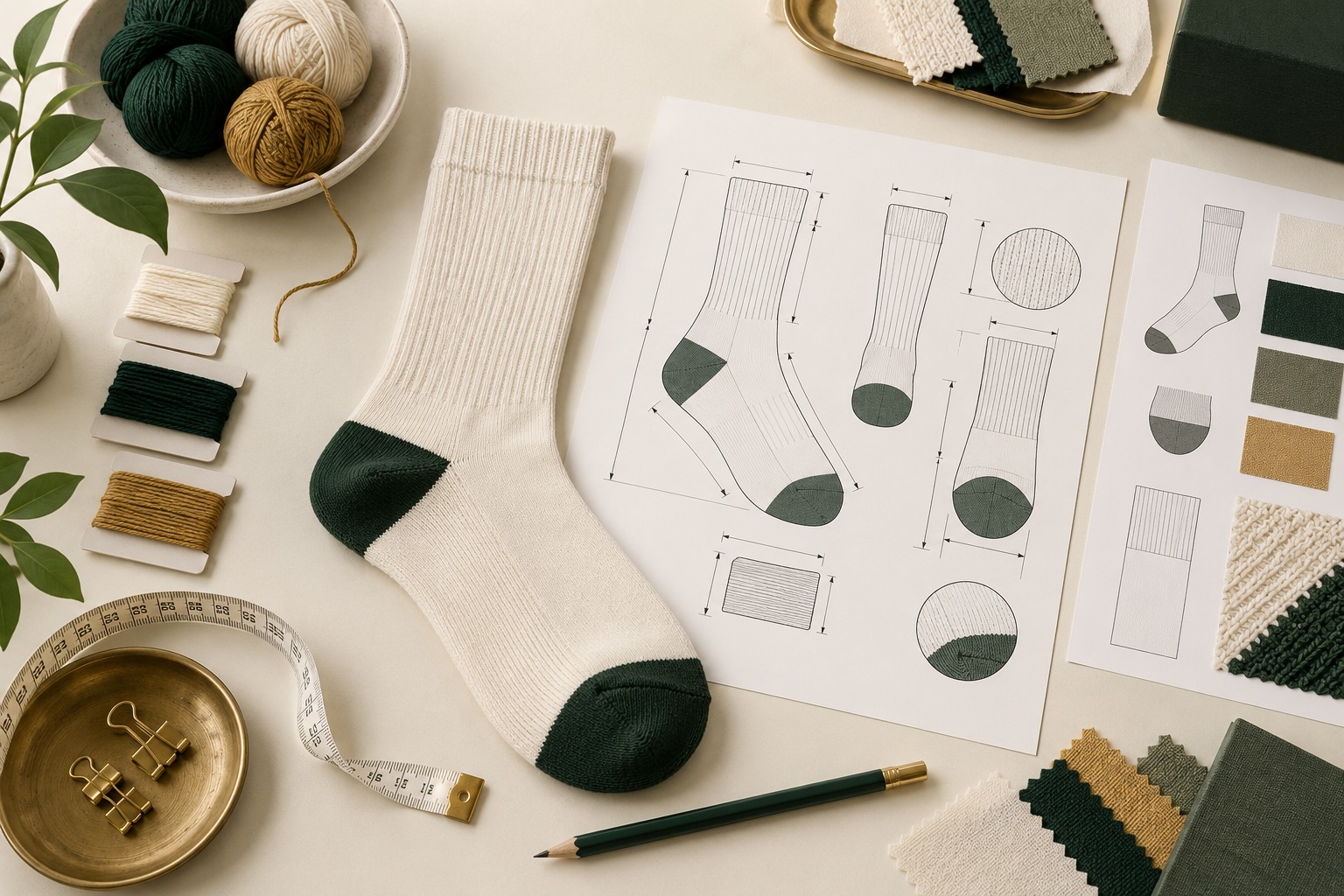
Ask for the manufacturer’s structural drawing before preparing final artwork. Check the finished dimensions, folds, joins and usable print areas. Supply readable logo files and agree on colour references. Tiny type can look acceptable on a large screen but become difficult to read once printed.
Where barcodes are needed, confirm the correct product identification and symbol with the responsible retailer or brand team. GS1’s barcode implementation guide explains the decisions involved in choosing and placing a barcode. Test the actual printed result rather than treating a digital image as a scanning guarantee.
Product information requirements vary by market and product. Have the responsible compliance team confirm the wording before print approval. Avoid adding unsupported fibre, certification or environmental claims to the packaging simply because they look appealing in a design.
Review a complete packed sample
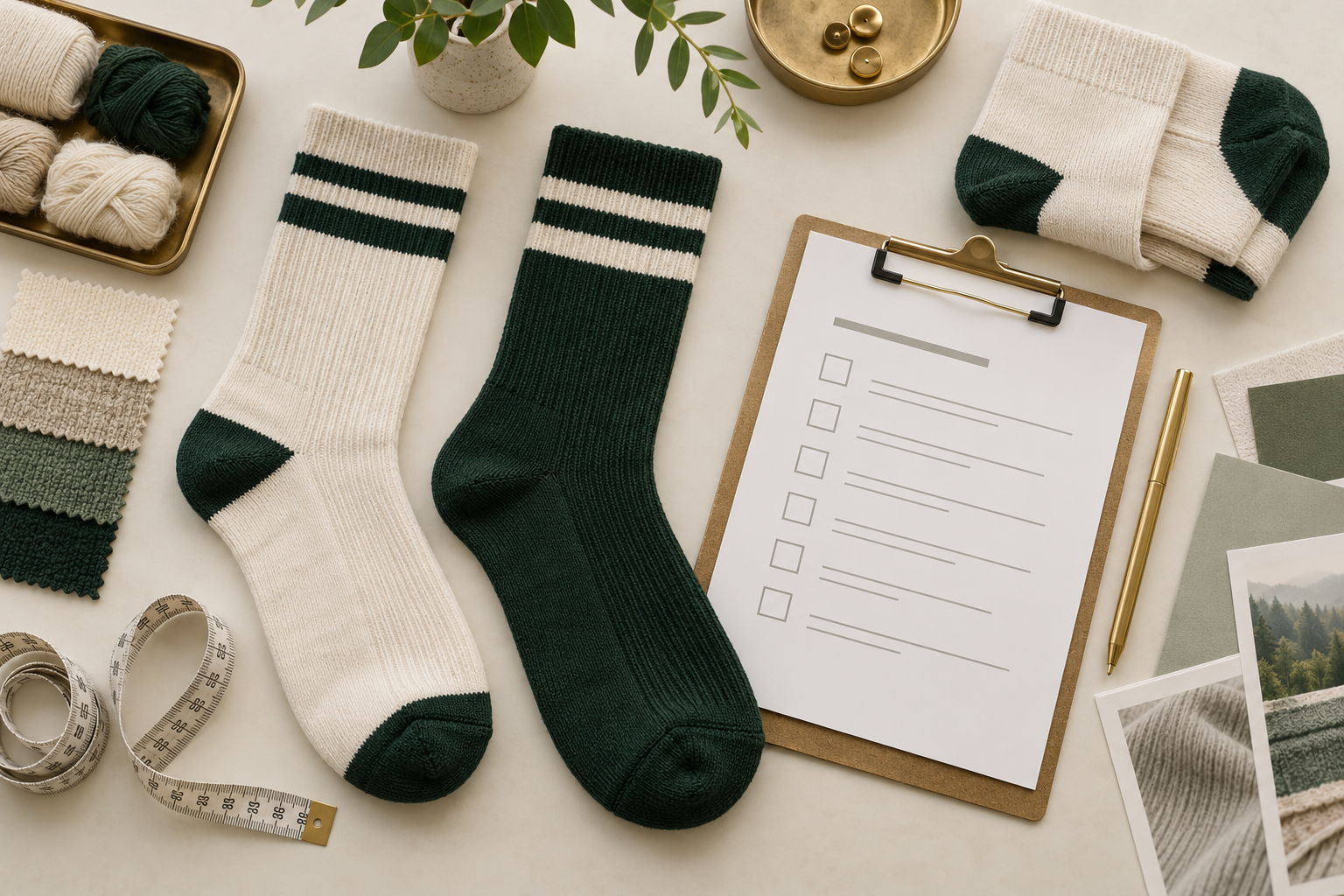
Place the final sock sample in the proposed packaging and check the full customer experience. Does the branding face the correct way? Can the size be found quickly? Is the pair easy to remove? Photograph the approved presentation from several sides and keep the file with the written packing instructions.
For shipping, consider the relationship between the individual pack, inner grouping and outer carton. Confirm carton dimensions, quantities and any destination-specific receiving instructions. This is a practical handling review, not a substitute for transport testing where your project requires it.
Custom sock packaging questions
Can packaging minimums differ from sock minimums?
Yes. A printed component may have its own supplier minimum or setup cost. Request a separate breakdown so you understand both the sock order and the packaging commitment before confirming the project.
Is a box always the premium choice?
No. A well-designed band can present the product clearly and suit the brand better than an oversized box. Choose the format around the customer’s purchase and the way the socks will be handled.
When should I finalise the design?
Develop the visual direction early, but confirm the final structure against an approved sock sample. Complete print approval before the agreed deadline so the packaging does not delay assembly.
Build a complete custom sock packaging brief
A packaging brief should connect the printed design with the way the order will be assembled. Include the style codes, the number of pairs in each sellable unit and a photograph of the intended fold. If there are several sizes, show how the packing team will identify each one without opening every finished pack.
Record who supplies each element. The brand may provide artwork while the manufacturer sources the printed component, or the brand may send ready-made packaging to the factory. Either arrangement can work, but quantities, delivery dates and responsibility for checking supplied components need to be clear.
Check the cost of the complete format
Compare custom sock packaging options using the total planned presentation rather than the print price alone. Ask about setup, minimum print quantities, assembly and any additional outer packing. Consider storage space and how the final unit will travel through your fulfilment process.
If you are testing a new collection, request a practical alternative alongside the preferred design. A simpler band might suit an initial launch while a more detailed box is developed for a later gift range. This comparison should preserve the information and handling requirements that are essential to the project.
Keep print versions under control
Use one approved artwork file per packaging variant. Include the style, size range and revision date in the file name, and remove obsolete proofs from the final handover folder. If only the barcode or size panel changes between variants, mark that difference clearly for the printing and packing teams.
Before approving custom sock packaging, review a proof at its actual printed size. Check spelling, contact details, pair count and product references. Make sure the artwork is oriented correctly after folding. Small errors are easier to spot when you inspect a physical prototype rather than a large presentation mockup.
Document the packed result for reorders
Photograph the approved pack from the front, back and side, with one image showing the contents. Keep those photographs with the written instructions. For a repeat order, confirm whether the packaging design, product assortment and sales channel remain the same before reusing the previous print files.
This record also helps your warehouse and photography team understand the intended product. A clear packing reference makes the handover from manufacturing to retail presentation more consistent, especially when several collections use similar socks or packaging colours.
Plan custom sock packaging around real handling
A packaging concept should be tested through the ordinary movements of your sales process. Ask the person who will receive the order to review how packs are counted, sorted and stored. A design that looks attractive in a studio may still be difficult to identify quickly on a warehouse shelf. Use the prototype to find those practical issues before committing to print.
Prepare a sample packing instruction
Show the folded socks, the orientation of the band or box and the finished presentation in a short sequence of photographs. Add the number of pairs per pack and the correct product reference. If the two socks have different artwork, show how they should face when packed. This is especially useful when the collection contains several similar styles.
For custom sock packaging with several components, list each component and the order in which it is assembled. Confirm who supplies labels, inserts and outer cartons. If a component arrives late, ask which part of the packing plan can proceed and which must wait. Avoid assuming that a sock production date automatically includes the arrival of separately sourced packaging.
Review how customers open the pack
Try opening the sample in the same way a customer would. Check whether the pair can be removed without pulling the knit or leaving unwanted marks. Make sure any fastening method is appropriate for the product. A secure presentation should still be convenient to handle and remove.
Ask whether the packaging will remain useful after opening. Some gift formats are intended to be kept, while a retail band usually has a short life. Match the material and complexity to that intended use. Do not make broad environmental claims without evidence about the actual materials, design and relevant disposal conditions.
Use a practical final review meeting
Bring the approved sock sample, artwork proof and packed prototype to the same review. Check that the quantity, size and colour information agree across all three. If there is a difference, resolve it in the written specification before signing off the print file. Update the change log so the factory and brand keep the same reference.
Before a repeat order, review what happened in practice. Note whether packs were easy to scan, whether the product arrived in the intended presentation and whether customers understood the set contents. Use those observations to improve the next custom sock packaging brief rather than changing the design based only on appearance.

Discuss your collection with Zenta Socks
Zenta can discuss branded presentation alongside your custom sock project. Share your sales channel, pair count, artwork and preferred custom sock packaging format. Our team will confirm the available options, pricing and minimums for the actual brief.
Explore low MOQ production, learn how our manufacturing process works, or request a quote for your next collection.